

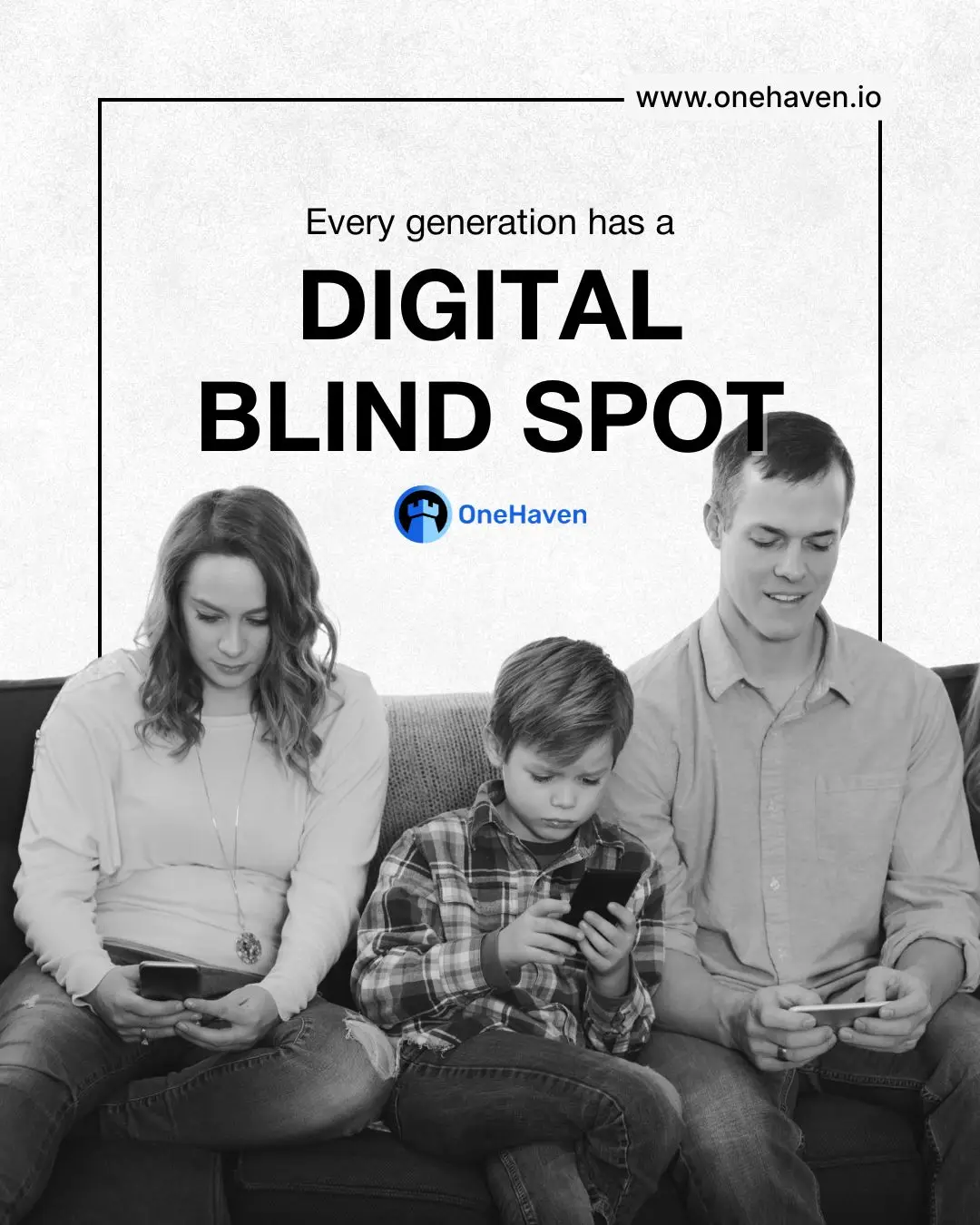
When it comes to online safety, most families picture a tech-savvy teenager or a curious child on their first phone. But the truth is, every generation faces its own kind of risk online. Kids, parents, and grandparents all have blind spots.
It’s not about who’s “good with technology” or who “should know better.” It’s about how each stage of life shapes the way we see the digital world.
At OneHaven, there isn’t one safety fix for everyone. Everyone in the family deserves protection that fits their way of living, playing, and connecting.
Here’s how those blind spots show up, and what families can do to bridge the gaps together.
Kids: Trusting Every Friendly Face
For kids, the internet is mostly play. Games, chats, videos, and new friends. It feels like a big, friendly neighborhood… until it isn’t.
Children often trust what they see and hear. If someone seems nice or familiar, they assume that person is safe. That’s what makes online games and chat platforms so tricky. Scammers and predators know how to blend in. They use kind words, shared interests, or fake profiles to build trust.
Teaching kids about digital trust is like teaching them how to cross the street. You don’t scare them away from walking; you show them how to look both ways first.
Try this:
The next time your child plays an online game, ask who they’re chatting with. Not as an interrogation, but as a conversation. You might say, “That’s cool, how do you know them?”
This builds a habit of thinking before trusting. It also keeps the door open for your child to come to you if something feels off later.
Kids don’t need to be afraid of the internet. They just need to learn how to question it.
Teens: Oversharing for Connection
If kids trust too easily, teens often share too freely.
Teenagers live in a world where visibility equals value. The more followers, likes, and comments, the better. It’s how they measure connection. But oversharing comes with hidden risks. Location tags, personal stories, and emotional posts can all be used against them.
Scammers target teens with messages that sound personal: fake brand partnerships, giveaway scams, or even DMs pretending to be a friend. They know what teens want: attention, approval, and opportunity.
Instead of lecturing teens about what not to share, help them see what they gain by protecting their privacy. Frame it as a smart move, not a restrictive one.
Try this:
Ask your teen what they think makes a “good” post. Then explore together how much is too much. Could someone find out where they live? What school they go to? Who their best friend is?
You’re not policing. You’re partnering.
Parents: Clicking Too Fast
Parents are the busiest generation online. Between work emails, digital forms, and online shopping, we click through screens all day long. It’s easy to forget how sophisticated scams have become.
Phishing emails now look exactly like legitimate messages from trusted brands. “Your package has shipped.” “Your account needs verification.” “A new login was detected.” They all sound urgent, and urgency is how they get you.
Modern scams aren’t sloppy anymore. They’re personalized, well-designed, and fast.
Try this:
Before clicking any link, hover over it or double-check the sender’s address. If it looks slightly off like a number instead of a letter or an unfamiliar domain, it’s safer to delete or verify through the company’s real website.
You can also model digital caution out loud. When your child sees you stop and check an email before responding, you’re teaching them that slowing down is part of being safe online.
Think of it as digital mindfulness. One extra second can prevent a costly mistake.
Grandparents: Believing What Looks Official
For older adults, the internet can still feel like a place where things look the way they are.
That used to be true. Official letters came on a real letterhead. Bank employees called you directly. “Tech support” was a real person, not a pop-up.
Today, scammers exploit that trust. They send convincing fake messages, copy logos, and even use AI-generated voices that sound like loved ones. Many older adults fall victim not because they’re careless, but because they were raised in a world built on good faith.
Try this:
Set up a family “verify first” rule. If a grandparent receives a call or text asking for money, they pause and confirm before reacting. A quick callback, a shared code word, or a message to another family member can save thousands of dollars and a lot of worry.
It’s not about making grandparents suspicious. It’s about giving them tools to feel secure while staying connected.
Bridging the Blind Spots in Your Digital Security
The tricky part of family digital safety is that no one sees their own blind spot clearly.
Kids think they’re just having fun.
Teens think they know better.
Parents think they’re too careful to be fooled.
Grandparents think scams happen to other people.
That’s why awareness has to be shared. Each generation has something to teach the others. Kids remind us to be curious. Teens remind us that online life is social, not separate. Parents show leadership. Grandparents model patience and experience.
When families talk openly about these risks, safety becomes a shared habit, not a personal flaw.
Try this:
Hold a “digital family check-in” once a month. Make it casual. Everyone shares one thing they learned, one thing they saw online that seemed suspicious, or one tip they discovered.
How OneHaven Helps Your Digital Safety
At OneHaven, we designed our tools for families because digital safety is a team sport. We have to work together so we can protect one another.
Our platform makes it easier to see what’s happening across generations. From suspicious messages to new device connections, OneHaven helps parents and caregivers stay informed without invading anyone’s privacy.
The goal isn’t to monitor. It’s to empower.
With OneHaven, families can:
- Stay aware of emerging scams that target specific age groups.
- Set up alerts that protect both kids and grandparents.
- Build healthy digital habits that grow with each generation.
Technology will keep evolving. Scammers will keep adapting. But families can stay one step ahead together.
Empowerment Over Fear in the World of Digital Safety
Online safety conversations often focus on what to avoid. At OneHaven, we focus on what to build. Awareness. Communication. Confidence.
When families understand their blind spots, they stop reacting out of fear and start acting with clarity.
Whether you’re a parent, a grandparent, or a teen teaching your family the latest app setting, your awareness matters.
Digital safety isn’t about being perfect. It’s about paying attention.
Bringing It All Together
Every generation has its digital blind spot, but that’s what makes families powerful. Each perspective fills the others’ gaps.
The kid’s curiosity, the teen’s creativity, the parent’s leadership, and the grandparent’s wisdom together, create something stronger than any scam or algorithm: connection.
At OneHaven, that’s what we protect. Not just data, but the relationships behind it.
Because when every generation learns to see clearly online, the whole family wins.
Ready to help your family see clearly online?
Join the OneHaven waitlist today for early access and your first month free. Together, we can protect what matters most.